15 Awesome Things To Do in Cusco
Last updated:
As a history nerd, I absolutely love Cusco! Though small, Cusco is packed with culture, all while surrounded by some of the most stunning landscapes on Earth. Whether you’re there to enjoy the city itself or because you are acclimating for your hike to Machu Picchu, you are absolutely missing out if you don’t go out and wander her enchanting streets! In this post, I share my list of 15 awesome things to do in Cusco.
Disclosure: Booking tours/accommodations via the links in this guide will earn me a small commission, at no extra cost to you. Earnings will go back to the maintenance of the travel guides provided on The Thrill of Pursuit. Thanks for your support.
<3 Dominique

1) Join a walking tour
The City of Cusco is a UNESCO World Heritage site. It was founded in the 12th century and served as the capital of the Inca Empire. When you walk its streets, you can expect to see cobblestone streets and colonial-era architecture. Pay attention and you’ll notice that beneath many of the colonial-era mansions are the foundations of Inca palaces and temples. Cusco is an open-air museum and is one of my favourite cities in the world for that reason. My top recommendation for things to do in Cusco is to join a walking tour of the city.

A city tour will not only help you get your bearings in this extremely walkable city but would also give a deep dive into Peruvian history.
If you’re on a budget, check out free Cusco tours on GuruWalk (remember to tip your Guide). For a more bespoke experience, check out this tour that covers some of the more dramatic points of Cusco’s history.
To learn more about the last days of the Inca Empire, check out A Brief History of Machu Picchu
2) Start at Museo Inka
If you have come to Cusco to learn about the history of the Inca Empire then visiting the Inka Museum should be at the top of your things to do in Cusco. It should really be the starting point of your visit before heading off to the famed archaeological sites.
Museo Inka offers a collection of artifacts (pottery, tools, weapons, mummies etc.) from the different cultures that have ruled the area. The museum organizes the collection in chronological order so visitors can follow the evolution of dominant cultures from pre-Inca societies to the Inca Empire and up to the arrival of the conquistadors.


Photo credit: Wikimedia Commons
The museum occupies Casa del Almirante (Admiral’s Palace) – a 17th century mansion. It is considered to be one of the best preserved colonial-era buildings in Cusco. Interestingly, the Admiral’s Palace was built on top of Huáscar’s palace. Huáscar was Sapa Inca – ruling monarch of the Inca Empire. His fight with his brother Atahualpa marked the beginning of the end of the Inca Empire (I cover that drama in A Brief History of Machu Picchu).
Ticket prices for Museo Inka are as follows:
- Adults: approx. 10 S/
- Students (valid ID required): 5 S/
- Children: free entry/donation to the museum

3) Look for Inca ruins in Centro Histórico
Cusco is infinitely interesting to me because the whole city is an open-air museum. As you walk its cobbled streets, you will notice that the foundation of many of the buildings are actually the remnants of Inca buildings. This architectural layering is unique to Cusco and no other Peruvian city looks like this. Spotting old Inca buildings was one of my favourite things to do in Cusco. Unsurprisingly, the Cusco neighbourhood that has the most number of notable Inca ruins is Centro Histórico.
You can identify Inca construction by the irregularly shaped stones, which builders cut so precisely that not even a credit card can pass between them. The stones fit together so precisely that they do not need mortar or cement to hold them in place. And still, the structures can withstand earthquakes. Like ancient Lego pieces.

In the previous section, I mentioned that the conquistadors built Museo Inka on the ruins of Huáscar’s palace. As you walk around Cusco, you will come across many other such buildings. But if you want to look for more examples, I list notable areas that showcase layers of Peruvian history below. I’m sure I’m missing many but I am listing ones that can be found in close to each other in Centro Histórico.
Map to help you find Inca ruins in Centro Histórico
Travel tip: you do not need to join a tour to look for the Inca ruins located through out Cusco. In fact, you may just accidentally spot them as you explore the city. But if you would like a local Guide to show and tell you about the sites listed in this section and more, check out this high-rated tour.
Qoricancha
Qoricancha (or Temple of the Sun in English) was the most important temple to the Inca Empire. You can find its ruins today within the Church and Convent of Santo Domingo. Its walls were once covered in sheets of gold. Unfortunately, the Incas stripped the gold from Qoricancha’s walls in 1533 to help pay the ransom the conquistadors demanded for the return of Inca Atahualpa.

The preservation of Qoricancha makes it one of the best places to understand the ingenuity of the Inca construction method. It is one of the few places where you can see the sophisticated curved Inca stone walls. Qoricancha is one of the most important archaeological sites in Cusco.
Ticket prices for the main temple of Qoricancha are as follows:
- Adults: 15 S/
- Students (valid ID required): 8 S/
- Children under 10: free entry
Note: if you have a Cusco Tourist Ticket, it does not include entrance into the main temple of Qoricancha. It only covers entrance to the Qoricancha Museum (which exhibits items found at the site and models of what Qoricancha used to look like before the Spanish conquest).
Calle Loreto
Calle Loreto is one of the busiest streets in Cusco. It is a narrow passageway that is between Inca walls. The walls that runs along Calle Loreto once belonged to the palace of Inca Huayna Capac (Huáscar and Atahualpa’s father) and the Acclahuasi (House of Chosen Ones). The Acclahuasi was a highly sacred institution in the Inca Empire. Young girls (known as acclas) who were selected for their beauty and talents lived and worked under strict supervision at the Acclahuasi. There they produced fine textiles, ceramics, and chicha – a corn based beer for religious rituals. Depending on their families’ social status, some of these women became priestesses or married to high-ranking men or served as the Inca’s secondary wife or were designated for ritualistic sacrifice. In this context, these women were highly valued.
After Huayna Capac’s death, Huáscar lived in the palace (known as Amurucancha or House of the Serpent). During the Spanish conquest, the conquistadors tore down the palace and the Acclahuasi and divided the lots between several conquistadors. The conquistadors built their homes over the Inca foundations. Today, these Inca-Spanish hybrid constructions remain on Calle Loreto.

Calle Hatunrumiyoc
Calle Hatunrumiyoc is another (busy) historic pedestrian street in Centro Histórico of Cusco. In Quechua, Hatun Rumiyuq can be translated as “street with the great stone”. The name is referencing a twelve-angled stone that is found in the Inca wall that runs along the street.
The Inca wall that contains the twelve-angled stone used to be part of the palace of Inca Roca (Roca was born nearly 100 years before Huayna Capac). Today, the twelve-angled stone is considered a national heritage object. The twelve-angled stone is a massive stone that was used in constructing a wall in Inca Roca’s palace. As the name suggests, the stone has 12 edges. What makes it so remarkable is that exemplifies how advanced Inca masonry truly is. Despite having 12 edges/angles, the Incas were still able to cut it so precisely that it fit in with the other stones in the wall without mortar or cement.

After the Spanish conquest, the Archbishop’s Palace was built on the ruins of the palace of Inca Roca. The twelve-angled stone then became part of the wall that consisted of the foundation of the colonial-era palace. Today, the Archbishop’s Palace houses the Museum of Religious Art.
Travel tip: please do not touch the twelve-angled stone when see it. The stone will gradually deteriorate with every touch.
4) Eat your way through Cusco
Peru is internationally renowned for its gastronomy scene and that scene is 100% not limited to Lima. While there is satisfaction to be had from finding YOUR local favourites independently, consider joining a food tour if you’re short on time. I absolutely love food tours led by locals. I feel like I get insider knowledge on the current best places for food and drinks.

Travel tip: check out this food tour that also walks you through the vibrant San Pedro Market.
If you prefer to explore the food scene independently, check out my Cheat Sheet: Peru for my recommendation on Peruvian foods to try.
5) Admire the Great Mural of Cusco
The Great of Mural of Cusco was considered to be the biggest mural in South America during its inauguration in 1992. It has since lost that title many times over but that doesn’t make the mural any less impressive. Located on Avenida El Sol, Cusco’s main road, this 50m by 6m mural is hard to miss.
The mural was commissioned by Cusco mayor Daniel Estrada Pérez to celebrate 500 years of Andean resistance against European colonization. A local artist named Juan Bravo Vizcarra was hired for the commission. As a result, Vizcarra created History of Cusco – a masterpiece that depicts 3,000 years of history in the region.

When looking at the mural from left to right, the mural depicts 3,000 years of history into five distinct eras:
- First era: Origin. The left-most section of the mural depicts the origin of the people of Cusco and features pre-Inca cultures, early agricultural practices, and the Ayer brothers of Andean lore.
- Second era: Inca Empire. The next section shows achievements reached by the Incas which are widely recognizable today.
- Third era: Spanish conquest. This section depicts the arrival of the conquistadors, conflict, the fall of the Incas and the start of the colonial period.
- Fourth era: Rebellion. This section highlights the large Andean uprising led by Túpac Amaru II against colonial oppression and its conclusion.
- Fifth era: Modern era. The right-most section of the mural highlights the independence and future of Cusco.
6) Explore the San Blas neighbourhood
The San Blas neighbourhood is without a doubt the trendiest neighbourhood in Cusco. If you need a break from the Cusco tourist circuit and learning all about the Incas, then consider heading over to the (comparatively) quaint San Blas! At San Blas you will find shops, small galleries, and eateries. Establishments in San Blas offer some of the best views of Cusco because of the area’s high elevation.
San Blas is the artisanal and cultural heart of Cusco. Vendors set up on the streets during the weekend markets. You can watch artisans making their crafts at the market and shop for paintings, textiles, hand painted ceramics, silver jewellery and many other unique souvenirs. Alternatively, the San Blas Market is open is six days a week.

7) Visit Inca archaeological sites (that aren’t Machu Picchu)
Cusco is the gateway to the Sacred Valley which includes Machu Picchu. Most visitors here are there to acclimate to the altitude before heading off to trek the Inca Trail to Machu Picchu. But did you know there are other impressive Inca archaeological sites that are very close to Cusco? While you are acclimating, you can visit the sites listed in this section during the day.

Sacsayhuamán
Sacsayhuamán (pronounced sax-eye-wah-MAN) is an impressive 15th century Inca complex located at the outskirts of Cusco. Actually, Cusco’s UNESCO World Heritage Site designation extends out to Sacsayhuamán archaeological park.
I have already described in great detail how ingenious Inca engineering and craftsmanship is in previous sections. You will see much of this exemplified at Sacsayhuamán. In addition, the site offers stunning panoramic views over Cusco.
If you’re up for the challenge while you are acclimating, you can walk to Sacsayhuamán from Plaza de Armas. That walk takes about 40 minutes.

The Cusco Tourist Ticket covers the entrance fee to Sacsayhuamán. If you do not wish to buy the Cusco Tourist Ticket, you can pay 70 S/ on site (make sure to bring cash).
Travel tip: the Cusco Tourist Ticket is a pass that grants you entry into many popular Cusco sites for a single price. The Full Ticket for example costs 130 S/ but is good for 10 days and grants entry into 16 tourist sites. The Partial Ticket costs 70 S/, is good for one or two days, and grants access to a limited set of tourist sites based on the circuit you choose. If you plan on visiting multiple archaeological sites and museums, look into buying a Cusco Tourist Ticket.
Q’enqo
The Q’enqo archaeological site is located near Sacsayhuamán. Qenqo is believed to have been used for for religious and astronomical rituals by the Incas. It is one of the largest huacas (holy place) in the Cusco region.

The entrance fee to Q’enqo is covered if you have the Full Cusco Tourist Ticket. If you purchase a Circuit 1 Partial Cusco Tourist Ticket at Sacsayhuamán, that ticket includes the entry fee to Q’enqo.
Puka Pukara
Puka Pukara archaeological site is also located in the same general direction of Sacsayhuamán from Cusco. The Inca military used this impressive fortress to protect Cusco and the broader Inca Empire. Its red hue at dusk gives the fortress its name. Because it was constructed on elevated ground, Puka Pukara offers fantastic views over the Sacred Valley.

The entrance fee to Puka Pukara is covered if you have the Full Cusco Tourist Ticket. If you purchase a Circuit 1 Partial Cusco Tourist Ticket at Sacsayhuamán, that ticket includes the entry fee to Puka Pukara.
Tambomachay
Tambomachay archaeological site is located near Puka Pukara. It is unclear what the site was actually used for but it consists of an impressive network of aqueducts, canals, and waterfalls. The water from this network run through the terraced rocks found throughout Tambomachay. The water that runs through Tambomachay come from three nearby springs. Some theories suggest the site served as a place for water worship or as a spa resort for the Incas.

The entrance fee to Tambomachay is covered if you have the Full Cusco Tourist Ticket. If you purchase a Circuit 1 Partial Cusco Tourist Ticket at Sacsayhuamán, that ticket includes the entry fee to Tambomachay.
Travel tip: while it is completely doable to explore these archaeological sites independently, check out this highly-rated tour that will take you to Qoricancha and the four sites listed in this section. The tour includes hotel pick up and drop off from Cusco and a Guide that can offer historical context to these fascinating places.
8) Find your favourite mirador
Mirador is Spanish for viewpoint. If it’s not obvious yet, I am a sucker for a good panoramic view. The terrain and elevation in Cusco and the Sacred Valley give you plenty of miradores to choose from. I am sure there many fantastic viewpoints that I’m not aware of but in this section I cover some of the well-known ones. Note: I have already mentioned that the San Blas neighbourhood offers some great views over Cusco; Mirador de San Blas is quite popular.
Cristo Blanco Statue
At 8 m/26 ft and erected in the hills above Cusco, the Cristo Blanco (White Christ) statue is hard to miss. His outstretched arms over Cusco symbolize his protection over the city. Arab-Palestinians gifted the statue to the people of Peru in 1945 to express gratitude for the asylum they received in the country during World War II.The statue’s location is also symbolic. It was built on Pukamoqo Hill which was sacred to the Incas.
You can walk to Cristo Blanco from Cusco. It is about a 30 minute walk from Plaza de Armas. Alternatively, you can also take a taxi there. The views from Cristo Blanco are some of the best of Cusco.

Mirador de San Cristóbal
The San Cristóbal viewpoint is quite iconic in Cusco. At the time of the Incas, it provided a great vantage point of the urban layout of Inca Cusco. The Incas planned Cusco in the shape of a puma – with Sacsayhuamán as the puma’s head, current day Plaza de Armas as its body, and the current day San Cristóbal viewpoint as the tail. Because of its location, the Incas used the San Cristóbal viewpoint as a place for surveillance and cosmic connection.
Today San Cristóbal hill is one of the most popular miradores in Cusco. It not only offers 360°views of the city but also the mountains beyond the Cusco, most notably snow-capped Ausangate. It is about a 20 minute walk from Plaza de Armas. For an even higher viewpoint in the area, you can pay 10 S/ to climb the bell tower of San Cristóbal Church.

Mirador de Santa Ana
Santa Ana is a quiet, residential neighbourhood in Cusco. The neighbourhood has a rich history which pre-dates the Inca Empire. The conquistadors entered through this town on their way to Cusco during the Spanish conquest. Today, Santa Ana has one of the most popular miradores in Cusco.
From the Santa Ana viewpoint, you can expect to see Plaza de Armas and the climb to Cristo Blanco (among other things of course).

9) Shop for uniquely cusqueño items
As you walk around Cusco, it becomes very apparent that the city is rich in artisanal tradition. Crafts were highly valued in the Inca Empire. These skills were so valued that they intertwined with religion, politics, and the economy. After the Spanish conquest, these trades were influenced by new techniques and materials but the local traditions still served as a base.
In modern times, the artisanal traditions that have been passed down for generations became endangered. The early 2000s brought a tourism boom in Cusco and the Sacred Valley. Many young Andeans abandoned their Indigenous roots in favour of lucrative jobs in hospitality and tourism. The less Indigenous someone presented, the higher their chances were of working in establishments that catered to international visitors. Mass tourism inadvertently was wiping out ancient Andean traditions and skills.
In recent times, people have recognised the importance of preserving Andean traditions and have made concerted efforts to preserve and promote them. One way of doing that is the creation of artisanal cooperatives. You will find plenty of co-ops in Cusco and Sacred Valley that workshops and demonstrations. By going to a workshop or two and shopping for uniquely cusqueño handicrafts, you are helping to keep the artisanal traditions of the Peruvian Andes alive.

For authentic pieces, the best bet would be to shop at the Cusco Artisan Center. Below is a shopping guide for the main crafts in Cusco.
Textiles
You will find plenty of workshops in Cusco and the Sacred Valley demonstrating the use of backstrap looms to create fabrics from alpaca and vicuña fibres. The Incas were highly advanced in this craft and these textiles were considered more valuable than gold. In the Andes, textile art is one of the most significant forms of cultural expression. You can find plenty of household textiles with intricate designs on them in the co-ops and shops; purchasing directly from the weavers would directly benefit local communities. For clothing and accessories, look for items made with alpaca wool which is luxurious and soft. Beware of buying fake alpaca wool at some of the fairs though.
Another item to look out for are maquinasca – intricate embroidery that originates from Cusco. Maquinasca is a true art form as these delicate designs are done by hand.

Pottery
Pottery is iconic of Peruvian history and culture. It is an art form that pre-dates the Inca Empire in the Andes. Inca pottery is renowned for its beauty and functionality. The commercialisation of pottery has helped keep Andean traditions alive and create economic opportunities in rural communities. You can find plenty of pottery workshops in Cusco and the Sacred Valley. There, you will find stoneware with intricate designs but more practical souvenirs include trays, vases and sculptures.
Another uniquely cusqueño souvenir are sounding ceramics. Sounding ceramics are unique Andean musical instruments made from ceramic pieces. When moved a certain way, they produce pleasant ambient sounds.


Silver
The Incas were experts in metalworking especially in working with gold and silver. Today, you can find metal artisans at Plaza de Armas jewellery stores and at the Cusco Artisan Market. You can shop for simple, elegant pieces or more intricate designs.
Leather
Leathercraft in the Cusco region can be traced back to pre-Inca times. After the Spanish conquest, new designs and techniques influenced the craft which resulted in a uniquely Andean aesthetic. Small accessories like bags, wallets, and belts make for practical souvenirs. I would love to look for some ojotas on my next visit, personally.
Travel tip: making a purchase directly from the artisans of Cusco and the Sacred Valley directly supports local communities, the preservation of ancient Andean traditions, and balancing income disparity that mass tourism has inadvertently brought to the region.
10) Attend a workshop
In the previous section, I explained that artisan cooperatives were created to preserve cultures and traditions and to help with the economic imbalance introduced by mass tourism to the region. Besides supporting local communities, attending one of the many artisan workshops in Cusco is fun!
You can find workshops on weaving, pottery, jewellery and wood carving easily in the San Blas neighbourhood. In Sacred Valley: 8 Wonderful Things To Do, I give directions on how to get to some weaving and pottery cooperatives outside of Cusco (they would have bigger, more immersive space).
11) Visit a museum
In previous sections, I have mentioned that the Inka Museum is a great starting point for those who are in Cusco to learn about the Inca Empire – builders of the great Machu Picchu wonder. I have also talked about the Museum of Religious Art, the museums at Qoricancha and the Santa Catalina church. In this section, I list other museums that are worth visiting and cater to other interests outside of Inca history.
Museum of Pre-Columbian Art (MAP)
I didn’t make it to MAP but I mention it here because many people cite it as their favourite museum in Cusco. MAP is an art museum that exhibits art from pre-Columbian cultures like Nazca, Paracas, and Moche. MAP highlights the level of sophistication of these ancient Peruvian civilisations. Mediums used: gold, textiles, ceramics and wood. The museum also features works from contemporary Peruvian artists.
The building that houses the Museum of Pre-Columbian Art was built on the ruins of an Inca ceremonial courthouse. After the Spanish conquest, the area was acquired by a conquistador and a mansion was built on the foundations of the courthouse.
Ticket prices for MAP are as follows:
- Adults: approx. 20 S/
- Students (valid ID required): 10 S/
Machu Picchu Museum/Casa Concha Museum
The Machu Picchu Museum is home to the largest collection of Machu Picchu artefacts in the world. In the 1910s, as Hiram Bingham excavated Machu Picchu, he took a lot of the artefacts back to the United States. For over 100 years, Yale (the patrons of Bingham’s Peru expedition) housed those artefacts. Some of those artefacts were repatriated back to Peru and can be found in the Machu Picchu Museum.

The building that houses the Machu Picchu Museum/Casa Concha Museum was built on the ruins of an Inca palace. The current colonial-era mansion on the site was built in 1710 and featured mural paintings, carved wooden decorations, a stone entrance, and Baroque-style balconies. The building was abandoned for several years before serving as army barracks and then as the Cusco Police Station for a number of years. It was lovingly restored and transformed into a museum in 2011.
Besides housing the Machu Picchu Museum it is also known as the Casa Concha Museum. (after its 19th century owners). The Machu Picchu Museum is a lot newer than the Inka Museum and offers interactive exhibitions. In addition, the colonial murals found in the second floor and walls of the staircase are featured for those interested in colonial-era interiors (this is the Casa Concha portion of the museum, I guess). They have also encased the original Inca floors in glass in the lower levels of the building.
Ticket prices for the Machu Picchu Museum/Casa Concha Museum are as follows:
- Adults: approx. 20 S/
- Students (valid ID required): 10 S/
Planetarium Cusco
Technically, Planetarium Cusco is located a little north of Cusco. However, if you buy tickets to the planetarium, they offer pick up and drop off at Cusco. Planetarium Cusco invites its visitors to see the night sky as it was interpreted by the Incas. Visitors will be guided through projections of constellations. Also, there will be opportunities to view distant stars via a powerful telescope.
Astronomy was very important to the Incas. In fact, the Sacred Valley was developed to run parallel to the Milky Way. I recommend this experience especially to those who will be hiking the Classic Inca Trail.

Ticket prices for Planetarium Cusco (general daily shows) are as follows:
- Adults: approx. 90 S/
- Students (valid ID required): 70 S/
12) Take a cooking class
Peru is renowned for its culinary scene so why not take lessons from a local chef? If you want to take home some new skills and authentic Peruvian recipes, check out this cooking class with a local chef.
Prior to class, a guide will take you on a tour of the vibrant Mercado Central de San Pedro. At the market, you will have the opportunity to sample local products while getting insights into Peruvian cuisine. Afterwards, a local chef will teach you how to make three classic Peruvian dishes.


13) See one of the many churches
There are a number of impressive churches that dominate the plazas of Cusco. Even if you’re not religious, it is hard not to appreciate the architecture, art, and history of these buildings.

Below are some notable churches in Cusco.
Cusco Cathedral
Cusco Cathedral is the imposing building at Plaza de Armas. It is the oldest and largest cathedral in Cusco. Prior to the Spanish conquest, the palace of Inca Viracocha stood on the site where Cusco Cathedral is today. The church is a good place to see where the conquistadors have fused Catholicism with Inca culture in order to convert the Quechua.
Its main altar which is covered in silver sheets with intricate religious artwork is a sight to behold. In addition, you can see paintings from students of the Cusco School – a school set up by the Spanish to educate the Quechua in European renaissance style artwork. The school limited its students to painting scenes of European and religious importance. The school also did not permit students to sign their own work. Nevertheless, works in the cathedral couldn’t contain the Andean perspective of its artists as evidenced by The Last Supper painting found over the doors of the cathedral which features cuy (guinea pig) at Christ’s last meal.

The Church of Santa Catalina
Located near Plaza de Armas, this church was built on the Inca ruins of Acllahuasi. As previously mentioned above in the section about Calle Loreto, the Acclahuasi was home to acclas – chosen women who served the state by contributing to economic production (weaving/brewing) and religious ceremonies dedicated to the Sun. After the Spanish conquest, the conquistadors dismantled the Acllahuasi and built the Santa Catalina church and monastery on its ruins. Today, the church houses a museum exhibiting what life was like for the Dominican nuns who lived in the monastery during the colonial era. The church also features artworks from the Cusco School.

San Blas Church
The San Blas Church is the oldest parish in Cusco. The intricately carved wooden pulpit at San Blas Church exemplifies Baroque art and ranks among the finest woodcarvings in the world. San Blas Church also features artwork from the Cusco School.

14) Attend Inti Raymi – Festival of the Sun
Today, the Quechua still widely practice the Inca religion. Because of this, mass ceremonies and imperial festivities are hosted annually in Cusco. The most famous one is Inti Raymi (Festival of the Sun in English).
Inti Raymi takes place every June 24th – the winter solstice/solar new year in the Inca tradition. Organisers hold the festivities in stages – starting at Qorikancha, then moving to Plaza de Armas, and finally to Sacsayhuamán.
The festival honours Inti – the Sun God. The celebrations are to ensure a healthy harvest and to mark the Inca New Year. The festivities typically involve up to 800 performers. Inti Raymi is the most important date in Cusco’s calendar.

Travel tip: if you would like to experience Inti Raymi with a local guide, check out this Inti Raymi tour offered by a highly-rated tour operator. It was the most complete tour I can find which includes Plaza de Armas.
15) Go on a day trip
There are plenty of natural wonders in this region of Peru. If you are acclimated enough and you think you will be able to handle it, going on a day trip is one the best things to do in Cusco.

Below are some of the best day trips from Cusco:
- Machu Picchu! (related read: A Brief History of Machu Picchu)
- Sacred Valley of the Incas (related read: Sacred Valley of Peru: 10 Wonderful Things To Do)
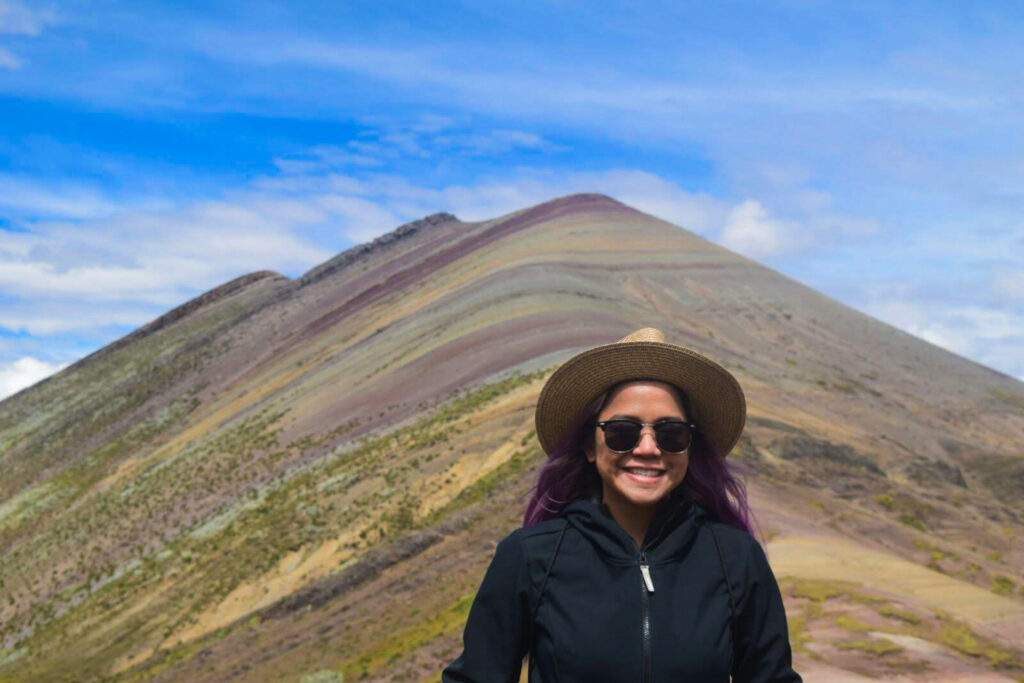
- Vinicunca – the original Rainbow Mountain (make sure you are acclimated before attempting this very strenuous hike)
- Palcoyo – an alternate Rainbow Mountain (related read: Travel Guide to Palcoyo – the alternate Rainbow Mountain in Peru)
- Pallay Poncho – the newest Rainbow Mountain
- Humantay Lake
- Seven Lagoons of Ausangate
- Pikillaqta Archaeological Park
- Tipón Archaelogical Park
For more information, check out 10 Best Day Trips from Cusco
Where to Stay in Cusco
- For budget travellers, check out Tierra Viva Cusco Saphi Hotel and Viajero Cusco Hostel.
- If you’re working with a mid-ranged budget, check out Hotel Rumi Punku and Hotel and Mirador Los Apus.
- For a more luxurious experience, check out Antigua Casona San Blas and Palacio del Inka.
Reminders before you go…
- Stay connected while on the road for less with an eSIM. An eSIM is a digital version of a SIM card. Instead of buying a little plastic chip and swapping it into your phone, you just download an eSIM. It connects your phone to a local network in whatever country you’re visiting — no stores, no waiting, and no fiddling with tiny cards.
My favourite eSIM has been Airalo. Just make sure your phone is eSIM compatible. - Considering travel insurance for you trip? World Nomads offers coverage for more than 150 adventure activities as well as emergency medical, lost luggage, trip cancellation and more.
Note: I receive a fee when you get a quote from World Nomads using this link. I do not represent World Nomads. This is not a recommendation to buy travel insurance

Hi! I’m Dominique.
I am the writer, photographer, and illustrator behind this travel blog.
I designed The Thrill of Pursuit to help you choose your next adventure, plan the journey, and help you navigate once you arrive at your destination.
Find out more on my About Me page.

Related Reads


What was your favourite thing to do in Cusco? Did you have any questions for your upcoming visit? I would love to hear from you in the comments below!